1. The Invisible Giants Powering Your World
When we discuss technology, the conversation
usually revolves around consumer apps, artificial intelligence, or cloud
computing. Yet some of the most essential technologies, the systems that help
prevent the disruption of modern life, remain largely invisible.
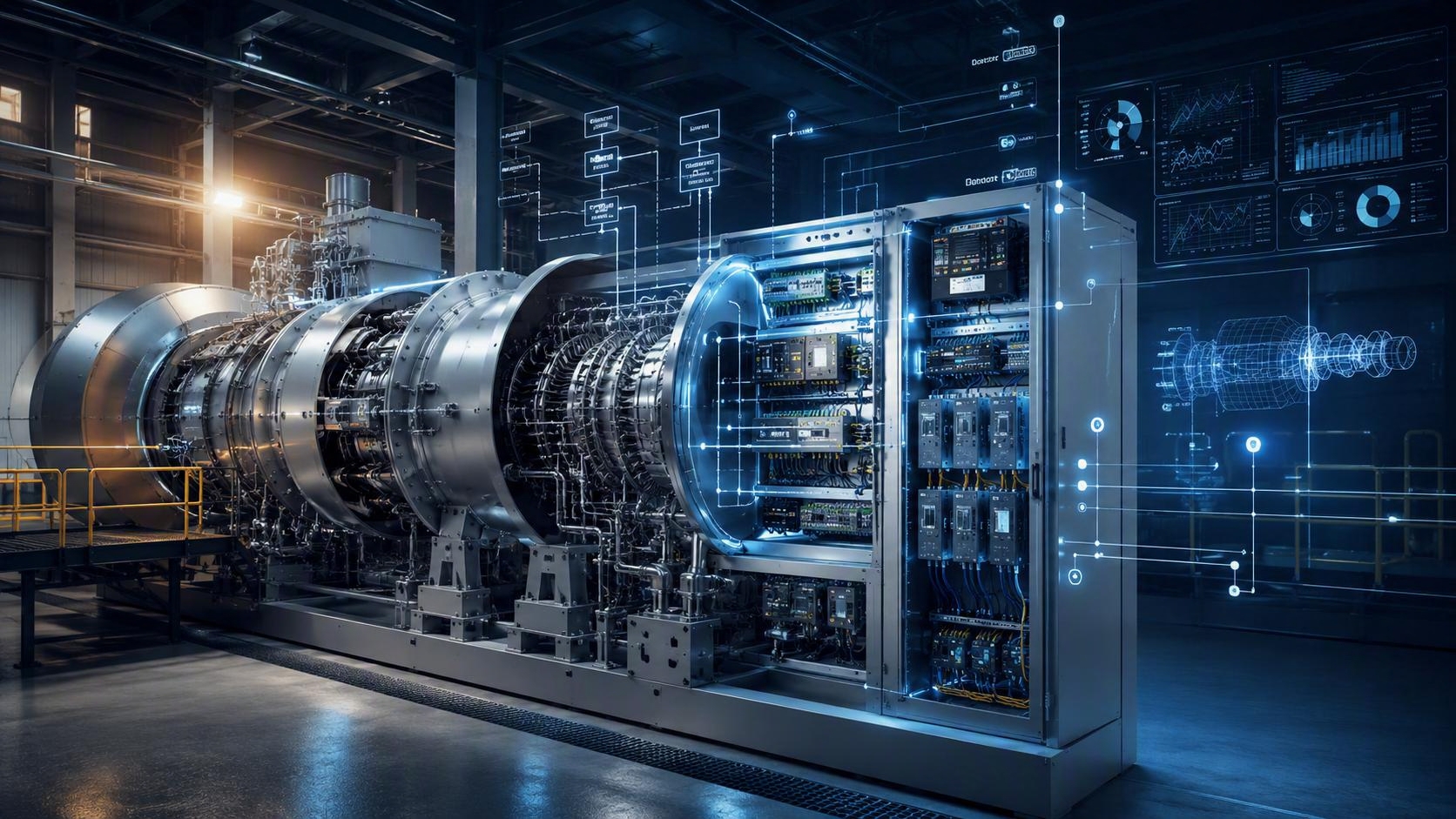
They are the massive rotating machines, including industrial gas turbines and
compressors, that generate electricity, power industrial facilities, and move
fuel through critical infrastructure.
These machines are powerful, but they become vulnerable when their control
systems become obsolete, unsupported, or unreliable. In an industry where a
single unplanned shutdown can cost millions of dollars in lost production,
control system reliability is not simply a technical concern. It is an
operational and financial necessity.
For more than 50 years, Petrotech has developed control solutions intended to
help operators keep critical rotating equipment operating safely, efficiently,
and reliably.
2. Takeaway One: Escaping the Proprietary Trap Through Open
Architecture
For decades, many industrial control systems
operated as black boxes. Proprietary hardware and software often locked
operators into a single vendor for replacement parts, engineering support,
upgrades, and maintenance.
During the 1990s, Petrotech led the turbomachinery industry by adopting an Open
Architecture approach to control system solutions. Rather than relying on
proprietary controllers, Petrotech developed solutions that could be deployed
on major commercially available hardware platforms such as Allen-Bradley,
Siemens, and GE. This approach allows operators to standardize on hardware that
aligns with their existing facility practices and long-term maintenance
strategies.
The adoption of the IEC 61131 programming standard further strengthened this
model. By developing applications using internationally recognized programming
standards, Petrotech’s proven control algorithms can be transported across
multiple hardware platforms. This gives operators greater flexibility when
selecting control hardware, simplifies training and maintenance, reduces spare
parts concerns, and helps protect long-term capital investments from platform
obsolescence.
Open Architecture transforms the control system from a restrictive vendor
dependency into a flexible operating asset that can evolve along with the
facility’s needs.
3. Takeaway Two: Reliable Starts Begin with Proven Control
Logic
Starting a large industrial gas turbine is one
of the most demanding phases of operation. During startup, the control system
must safely coordinate ignition, fuel regulation, acceleration, temperature
limits, and protective functions while minimizing stress on critical equipment.
For more than five decades, Petrotech has incorporated turbomachinery operating
experience into proven control applications designed to support reliable and
repeatable turbine startup. One example is Petrotech’s Soft Light-Off
procedure, which uses controlled Fuel Control Valve ramping and thermal
limiting functions to establish ignition while minimizing temperature overshoot
and thermal shock. If flame is not established safely, the control system
incorporates a fast shutdown response to prevent unwanted operating conditions.
Beyond ignition, the turbine control package includes startup and shutdown
sequencing, fuel regulation, acceleration control, exhaust temperature
monitoring, and machinery protection functions that are critical to reliable
turbine operation. Advanced software functions, including exhaust temperature
hot-spot detection, cold-spot detection, and thermocouple failure diagnostics,
help operators identify abnormal conditions while protecting critical turbine
components.
Reliable startup performance is important, but long-term equipment protection
and operational consistency throughout the operating cycle are equally
important. By combining proven control algorithms with decades of field
experience, Petrotech helps operators reduce operational risk while supporting
safe and efficient turbine operation.
4. Takeaway Three: Modernizing Legacy Systems Without
Starting Over
Unlike consumer electronics, critical energy
infrastructure is expected to operate for decades. Control systems must
therefore be designed with both longevity and maintainability in mind.
Petrotech has supplied control systems that remain in operation decades after
installation, including systems originally commissioned in the 1970s and 1980s.
This longevity reflects the importance of durable design, maintainable
architectures, and long-term support strategies in industrial environments.
Eventually, however, every control system reaches a point where modernization
becomes beneficial or necessary. Petrotech provides migration paths that allow
operators to upgrade aging control systems while minimizing disruption to
operations. These modernization solutions can be applied not only to legacy
Petrotech systems, but also to OEM and third-party control platforms that have
become obsolete, difficult to support, or expensive to maintain.
In some cases, products such as the Em-400 were developed specifically to
provide a migration path for earlier platforms such as the ASC-M series. More
broadly, however, the goal is to help operators preserve valuable
infrastructure, retain familiar operating philosophies where appropriate, and
implement maintainable solutions that can remain supportable for years to come.
5. Takeaway Four: One Integrated Brain Is Better Than
Multiple Isolated Boxes
Traditional turbine control arrangements often
relied on separate systems for fuel control, protection, sequencing, capacity
control, and monitoring. These individual boxes had to communicate with each
other, creating additional complexity and potential points of failure.
Petrotech moved toward Integrated Control Systems that use common processing
platforms to manage these functions together.
An integrated system gives the operator a single control environment rather
than a collection of disconnected subsystems. Fuel regulation, protection,
capacity control, monitoring, and sequencing can be coordinated within one
platform.
This simplification can improve reliability, reduce the need for complex
communication links, lower spare-parts requirements, and make training easier
for onsite personnel. It also provides greater operational clarity when
troubleshooting or responding to abnormal conditions.
6. Takeaway Five: Reliability Requirements Are Not
One-Size-Fits-All
Different facilities have different
operational requirements, risk tolerances, and budget constraints. As a result,
control system architecture should be selected based on the specific needs of
the application rather than a single universal standard.
Petrotech provides solutions ranging from simplex architectures to redundant,
dual-redundant, and Triple Modular Redundant (TMR) configurations. This
flexibility allows operators to select a level of availability and fault
tolerance that aligns with both operational requirements and project economics.
For many applications, simplex or redundant systems provide an effective and
economical solution. Where higher levels of availability are required,
dual-redundant architectures can provide additional fault tolerance through
redundant processors, communications, and power infrastructure. For the most
critical applications, TMR architecture offers multiple independent logic
paths, sophisticated voting strategies, and the ability to tolerate multiple
failures while maintaining operation.
The objective is not to apply the highest level of redundancy in every
situation. The objective is to provide the level of reliability, availability,
and maintainability appropriate for the operational and economic needs of the
facility.
Conclusion: The Future Is Interoperable
The industrial progress of the past 50 years
demonstrates that operators no longer need to accept the limitations of
proprietary black-box control systems.
The future of energy depends on solutions that are open, maintainable,
adaptable, and capable of evolving alongside the equipment they support. Open
Architecture, lifecycle planning, intelligent modernization strategies,
integrated controls, and flexible system architectures help operators protect
production, reduce risk, and maximize the value of critical industrial assets.
As industries continue to modernize, the most successful control solutions will
not be defined by proprietary technology or a single hardware platform. They
will be defined by their ability to remain maintainable, supportable, and
aligned with the operational needs of the customer for decades to come.
For more information about industrial control-system modernization,
rotating-equipment controls, Open Architecture solutions, or for
project-specific inquiries regarding Petrotech, please contact PSIG de
Venezuela at info@psig-intnl.com.
#Petrotech #PSIGdeVenezuela #Turbomachinery #ControlSystems #OpenArchitecture #IndustrialModernization #RotatingEquipment #OperationalReliability #PowerGeneration #EnergyInnovation #IndustrialAutomation #OilAndGasL